
How Much Do Dental Implants Cost? (2026 Guide)
By Envision Dental Spa
Published September 07, 2026
If you’ve started researching dental implants, chances are the first question you typed into Google was some version of “how much does a dental implant actually cost.” It’s the right question to ask first, and the honest answer is that it depends on a handful of specific factors we’ll walk through below.
At Envision Dental Spa, we believe patients make better decisions when they understand pricing upfront, not just after a consultation. Here’s a clear, no-pressure breakdown of what dental implants cost in 2026, what drives that number up or down, and how to budget for the investment.
The Short Answer
A single dental implant, including the post, abutment, and crown, typically runs $3,500 to $5,500 in the United States. Full-arch solutions like All-on-4 or All-on-6 generally range from $18,000 to $30,000+ per arch, depending on materials and whether bone grafting is needed.
That’s a wide range, so let’s break down exactly what moves you toward the low end or the high end.
What’s Actually Included in “One Implant”
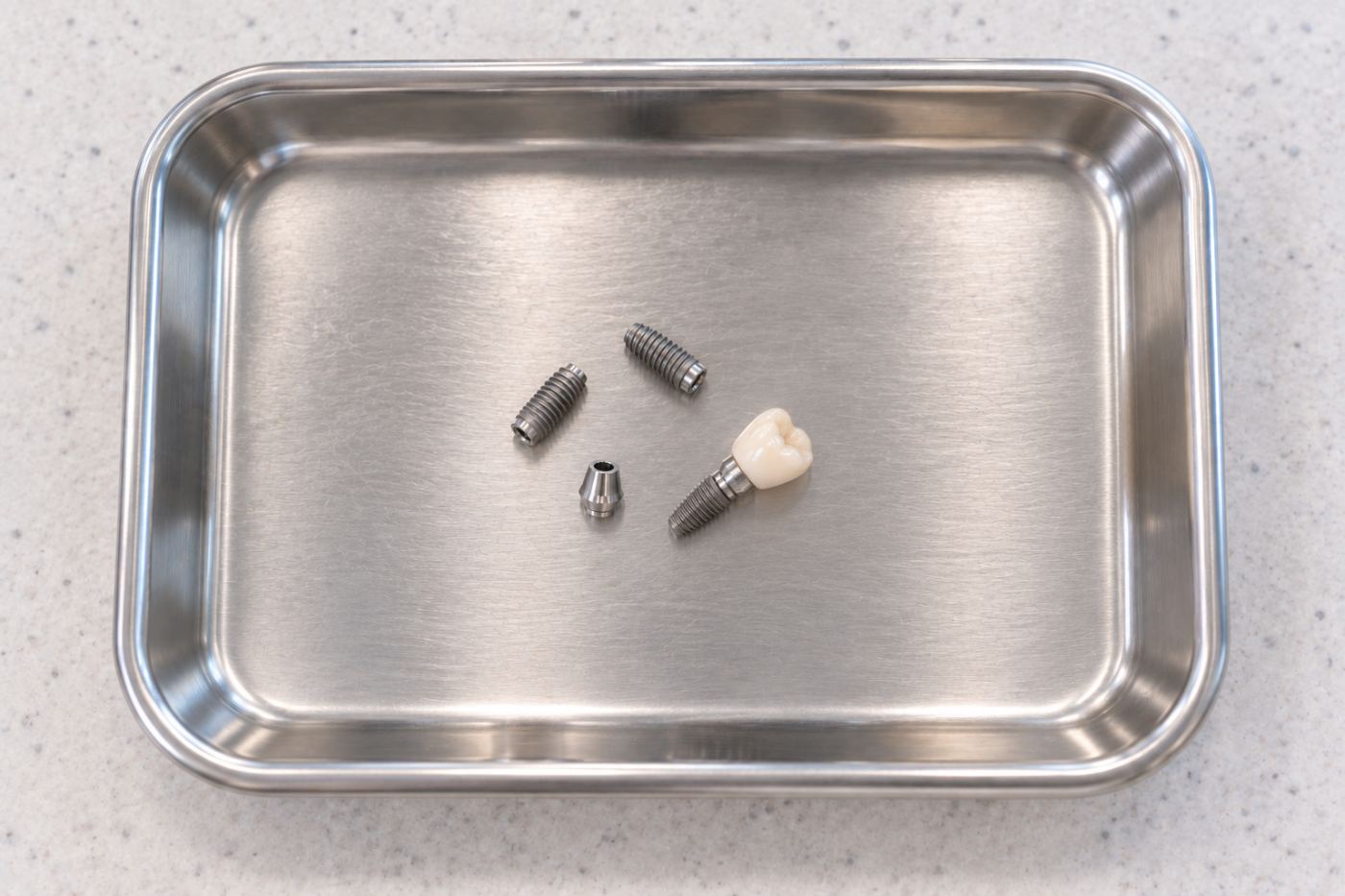
When people ask about implant cost, they’re often picturing one number, but a single implant is really three components:
- The implant post — the titanium (or zirconia) post surgically placed in the jawbone, acting as the artificial tooth root
- The abutment — the small connector piece attached to the post once it has fused with the bone
- The crown — the visible, custom-made replacement tooth attached on top
Some practices quote these separately; others bundle them into one fee. Always ask whether a quote covers all three parts, plus any imaging or follow-up visits, so you’re comparing apples to apples between providers.
The 5 Biggest Factors That Affect Your Price
- 1How many teeth you’re replacing. A single missing tooth is a very different case from a full arch. Multiple adjacent implants can sometimes share costs on imaging and surgery time, which is why full-arch solutions, while expensive in total, often cost less per tooth than replacing several teeth individually.
- 2Whether you need bone grafting. After a tooth has been missing for a while, the jawbone underneath it can shrink. If there isn’t enough bone to anchor an implant securely, a bone graft is needed first. This adds cost and several months to the timeline, but it’s a normal, well-established part of implant dentistry, not a sign that something went wrong.
- 3Material choice. Titanium implants are the industry standard and typically less expensive. Zirconia implants, a metal-free alternative some patients prefer, usually cost more.
- 4Your dentist’s experience and technology. Practices using 3D imaging and guided surgery for more precise placement, and dentists with significant implant-specific training, often charge more — but that expertise also correlates with fewer complications and better long-term outcomes.
- 5Where you live. Fees in major metro areas typically run higher than in smaller cities, reflecting differences in overhead, lab costs, and local market rates.
Does Insurance Cover Dental Implants?
Traditional dental insurance often provides only partial coverage for implants, and some plans exclude them entirely, though this is slowly changing as implants become more standard. Here’s what’s worth checking with your specific plan:
- Whether the surgical placement is covered, partially covered, or excluded
- Whether the crown is billed and covered separately from the implant post
- Whether a bone graft, if needed, falls under a different coverage category
- Your plan’s annual maximum, since implant treatment can approach or exceed it in a single year
Many practices, including ours, also offer in-house financing or work with third-party healthcare lenders to break the total cost into monthly payments.
Is a Cheaper Implant Ever the Better Choice?
Not usually. Implant dentistry is one area where the cheapest option can end up costing more in the long run. A poorly placed implant that fails within a few years often means starting the process over, sometimes after additional bone loss that makes the second attempt more complex and expensive.
When comparing quotes, ask about the dentist’s implant-specific training, how many cases they’ve placed, and what their long-term success rate looks like — not just the number on the estimate.
What the Full Process Typically Costs, Start to Finish
For a single tooth, a typical patient journey looks like this:
| Stage | What It Covers | Typical Range |
|---|---|---|
| Consultation & imaging | 3D scan, treatment planning | $150–$500 (often credited toward treatment) |
| Bone graft (if needed) | Rebuilding jawbone density | $600–$3,000 |
| Implant placement | Surgical placement of the post | $1,500–$3,000 |
| Abutment | Connector piece | $300–$700 |
| Crown | Final, custom-made tooth | $1,000–$3,000 |
Totals vary by case, which is why an in-person consultation and imaging are the only way to get a number you can actually plan around.
Getting an Accurate Number for Your Case
Every implant case is different, and the only way to know your real cost is a consultation with 3D imaging so your dentist can see your bone structure and treatment needs firsthand. At Envision Dental Spa, we walk every patient through a full, itemized breakdown before any treatment begins, so there are no surprises later.
Ready to find out what your implant would actually cost?
Schedule a consultation with Envision Dental Spa to get a personalized quote and treatment plan.
Schedule a ConsultationFrequently Asked Questions
Envision Dental Spa — your trusted cosmetic and implant dentistry practice in Arlington, Texas. This post is for general educational purposes and isn’t a substitute for a personalized consultation.