


Do Veneers Ruin Your Natural Teeth? The Truth About Prep
By Envision Dental Spa
Published October 15, 2026
This is a fair question to ask before committing to a permanent cosmetic procedure, and it deserves a straight answer rather than a sales pitch. Here’s what actually happens to your natural teeth with veneers.
What “Prep” Actually Means
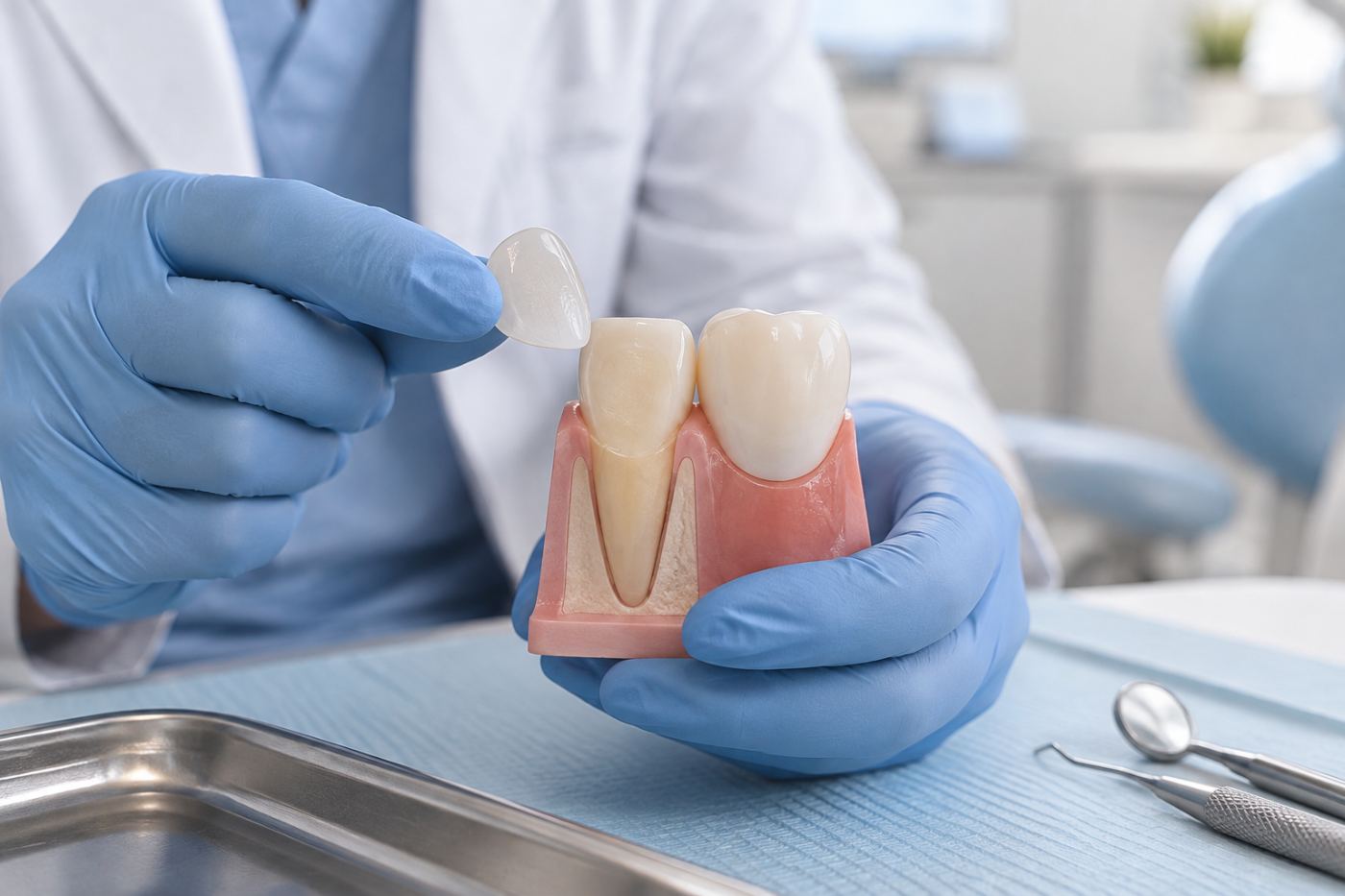
For traditional porcelain veneers, your dentist removes a thin layer of enamel — typically 0.3 to 0.7 millimeters, roughly the thickness of a fingernail — from the front surface of the tooth. This creates room for the veneer shell so it sits flush and looks natural rather than bulky.
This step is permanent. Enamel doesn’t grow back, which means once a tooth has been prepped for a veneer, it will need some form of covering (a veneer, or eventually a crown) for the rest of its life.
Does This “Ruin” the Tooth?
Not in the sense of damaging its health or function — when done correctly by an experienced dentist, the underlying tooth structure remains healthy and functional, protected by the veneer on top. The honest framing is that it’s an irreversible cosmetic commitment, not a health risk. The tooth isn’t harmed; it’s permanently altered in a way that requires ongoing coverage.
Where Problems Actually Come From
Over-aggressive prep. Removing more enamel than necessary — sometimes done to correct significant misalignment through veneers rather than addressing it with orthodontics first — can increase sensitivity and weaken the tooth more than a standard veneer case would.
Poor bonding technique. Veneers that aren’t properly bonded can allow bacteria to get underneath, leading to decay in the prepped tooth beneath.
Skipping orthodontic correction when it’s actually needed. Using veneers to mask significant crowding or bite issues, instead of addressing them first, can lead to a less durable, higher-maintenance result.
This is precisely why choosing an experienced cosmetic dentist matters more with veneers than almost any other procedure — the technique used directly affects both the outcome and the long-term health of the tooth underneath.
What About No-Prep Veneers?
No-prep veneers were developed specifically to address this concern — they require little to no enamel removal, making them a reversible option in many cases. The tradeoff is that they’re not suitable for every tooth or every correction; teeth that are already significantly misaligned or heavily restored may not be good candidates.
The Honest Bottom Line
Veneers don’t damage healthy teeth when done well — but traditional porcelain veneers are a permanent decision, not a temporary cosmetic fix. That’s an important distinction to understand clearly before moving forward, and a good cosmetic dentist should walk you through it directly rather than glossing over it.
Want an honest assessment of what veneers would mean for your specific teeth?
Schedule a consultation with Envision Dental Spa for a straightforward conversation, no pressure.
Schedule a ConsultationFrequently Asked Questions
Envision Dental Spa — your trusted cosmetic and implant dentistry practice. This post is for general educational purposes and isn’t a substitute for a personalized consultation.