


Best Teeth Whitening Options in 2026: In-Office vs. At-Home vs. Whitening Strips
By Envision Dental Spa
Published October 22, 2026
Whitening is the most accessible cosmetic dental improvement available, but the options range wildly in cost, strength, and results. Here’s an honest comparison of what actually works.
In-Office Professional Whitening
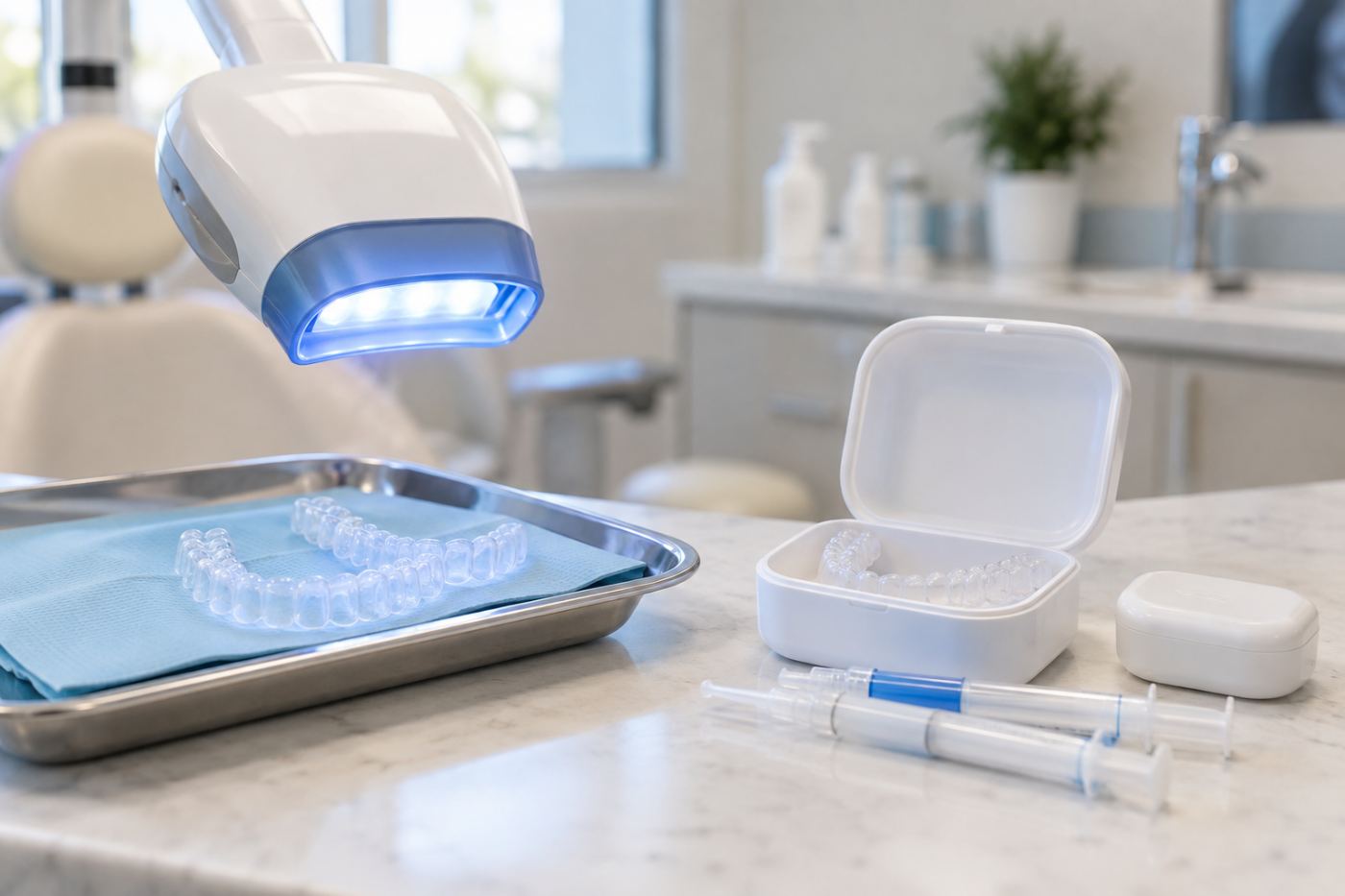
What it is: A dentist applies a high-concentration whitening gel (often activated with light or heat) in a single visit. Typical cost: $400-$800 per session. Results: The most dramatic and fastest results available — often several shades lighter in a single appointment. Best for: Patients who want maximum results quickly, ahead of an event, or who haven’t had success with at-home methods.
Professional Take-Home Trays
What it is: Custom-fitted trays made from an impression of your teeth, used at home with professional-strength gel prescribed by your dentist. Typical cost: $200-$500. Results: Gradual but significant whitening over 1-2 weeks, with more even, consistent coverage than store-bought trays since they’re custom-fitted to your teeth. Best for: Patients who want professional-strength results without an in-office visit, or who want to maintain results after an in-office treatment.
Over-the-Counter Whitening Strips
What it is: Thin, flexible strips coated with a lower-concentration whitening gel, applied directly to teeth for a set time each day over 1-2 weeks. Typical cost: $20-$60. Results: Modest but real improvement for mild staining; less effective on deeper or more stubborn discoloration, and less even coverage since strips don’t conform as precisely as custom trays. Best for: Budget-conscious patients with relatively mild staining looking for a noticeable, low-cost improvement.
Whitening Toothpaste and Rinses
What it is: Mild abrasives or low-concentration whitening agents that primarily address surface stains rather than deeper discoloration. Typical cost: $10-$20. Results: Minimal — helps maintain results from a previous whitening treatment or slightly brightens surface stains, but won’t meaningfully lighten your natural tooth shade on its own. Best for: Maintenance after a professional whitening treatment, not as a standalone solution.
What Actually Determines How Well Whitening Works
The cause of discoloration matters. Surface stains from coffee, tea, wine, and tobacco generally respond well to whitening. Discoloration from certain medications (like tetracycline) taken during childhood, or from the inside of the tooth due to trauma or a root canal, often doesn’t respond to standard whitening and may need veneers or bonding instead.
Existing dental work won’t whiten. Crowns, veneers, and fillings don’t change color with whitening treatments, which can create a noticeable mismatch if you have visible dental work and choose a more dramatic whitening option.
Which Should You Choose?
If you want the fastest, most dramatic result and don’t mind the cost, in-office whitening delivers. If you want a strong result with more flexibility and a lower price, professional take-home trays are a great middle ground. If your staining is mild and budget is the priority, over-the-counter strips are a reasonable starting point.
Not sure which option fits your teeth and goals?
Schedule a consultation with Envision Dental Spa and we’ll recommend the right approach, including whether whitening alone will get you the result you want.
Schedule a ConsultationFrequently Asked Questions
Envision Dental Spa — your trusted cosmetic and implant dentistry practice. This post is for general educational purposes and isn’t a substitute for a personalized consultation.