


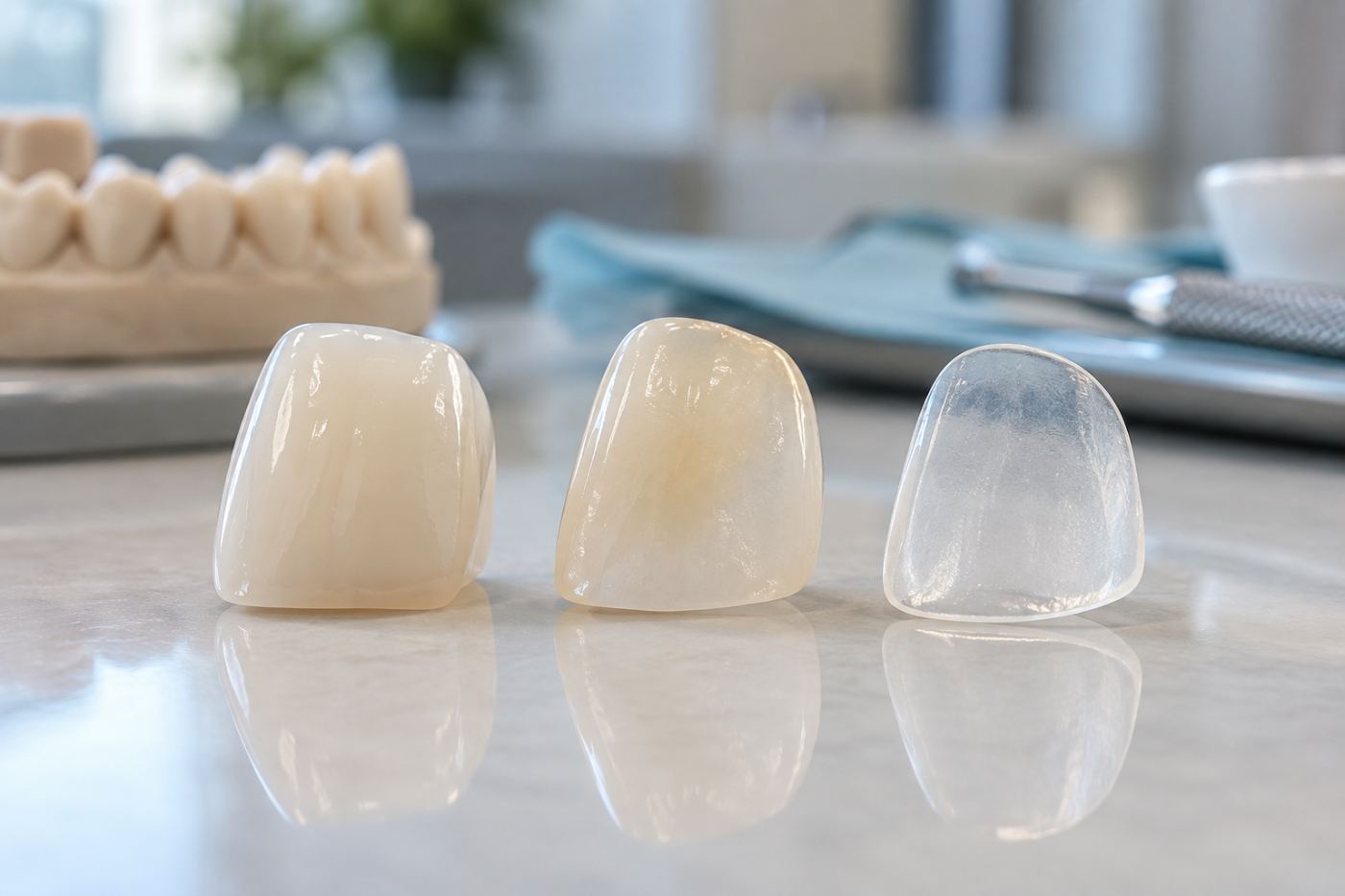
Porcelain vs. Composite vs. No-Prep Veneers: Full Comparison
By Envision Dental Spa
Published September 17, 2026
Once you decide veneers are worth exploring, the next question is which type. The three main options — porcelain, composite, and no-prep — differ in cost, durability, appearance, and how much of your natural tooth they require altering. Here’s how to actually choose.
The Quick Comparison
| Porcelain | Composite | No-Prep | |
|---|---|---|---|
| Typical cost per tooth | $100 – $3,000 | $250 – $1,500 | $800 – $3,500 |
| Lifespan | 15 – 25 years | 5 – 7 years | 10 – 20 years |
| Enamel removal | Yes, ~0.3-0.7mm | Minimal to none | Little to none |
| Reversible | No | Mostly | Often yes |
| Stain resistance | Excellent | Fair — can stain over time | Excellent |
| Chairside vs. lab-made | Lab-fabricated (2 visits) | Sculpted chairside (1 visit) | Lab-fabricated (2 visits) |
| Best for | Long-term, natural-looking transformation | Budget-conscious, minor fixes, quick turnaround | Preserving natural enamel while still upgrading appearance |
Porcelain Veneers
Porcelain is the traditional gold standard: thin ceramic shells custom-fabricated in a dental lab from an impression or digital scan of your teeth, then permanently bonded to the front surface. Getting there requires removing a thin layer of enamel to make room for the shell, which means the change is permanent — once you go with porcelain, that tooth needs a covering for life.
Why patients choose it: durability, a natural translucent look that mimics real enamel, and strong resistance to staining from coffee, wine, and everyday foods.
Composite Veneers
Composite veneers are made from the same tooth-colored resin used in dental bonding, sculpted directly onto your teeth by the dentist in a single visit — no lab, no waiting for a fabrication turnaround. This keeps the cost meaningfully lower and the process much faster.
Why patients choose it: lower upfront cost, same-day results, and a good option for minor corrections (small chips, gaps, slight discoloration) rather than a full smile overhaul. The tradeoff is that composite is more prone to staining and chipping over time, and typically needs touch-ups or replacement sooner than porcelain.
No-Prep Veneers
No-prep veneers (marketed under names like Lumineers® and DaVinci veneers) are ultra-thin porcelain shells, typically 0.2-0.3mm, designed to bond directly over your existing tooth structure with little to no enamel removal. Because they don’t require grinding down your natural tooth, the change is often reversible, and many patients report needing little to no anesthesia for the procedure.
Why patients choose it: it’s often the best fit for patients who want a straightforward upgrade to shape or color without the permanent commitment of traditional veneer prep. The tradeoff is that, because so little tooth is altered, this option works best on teeth that are already relatively well-aligned — deeper corrections may not be achievable with no-prep alone.
So Which Should You Choose?
- Want the longest-lasting, most natural, most stain-resistant result and don’t mind a permanent commitment? Porcelain is usually the right call.
- Want a lower-cost fix for a chip, gap, or minor discoloration, done in one visit? Composite is often the practical choice.
- Want to preserve as much natural tooth structure as possible while still upgrading your smile? No-prep is worth discussing, if your teeth are a good candidate for it.
The right answer really does depend on your specific teeth, goals, and budget — which is exactly why this decision is best made at a consultation with a digital smile preview rather than from a general comparison chart.
Not sure which type fits your smile?
Schedule a consultation with Envision Dental Spa and we’ll walk you through what each option would actually look like on your teeth.
Schedule a ConsultationFrequently Asked Questions
Envision Dental Spa — your trusted cosmetic and implant dentistry practice. This post is for general educational purposes and isn’t a substitute for a personalized consultation.