


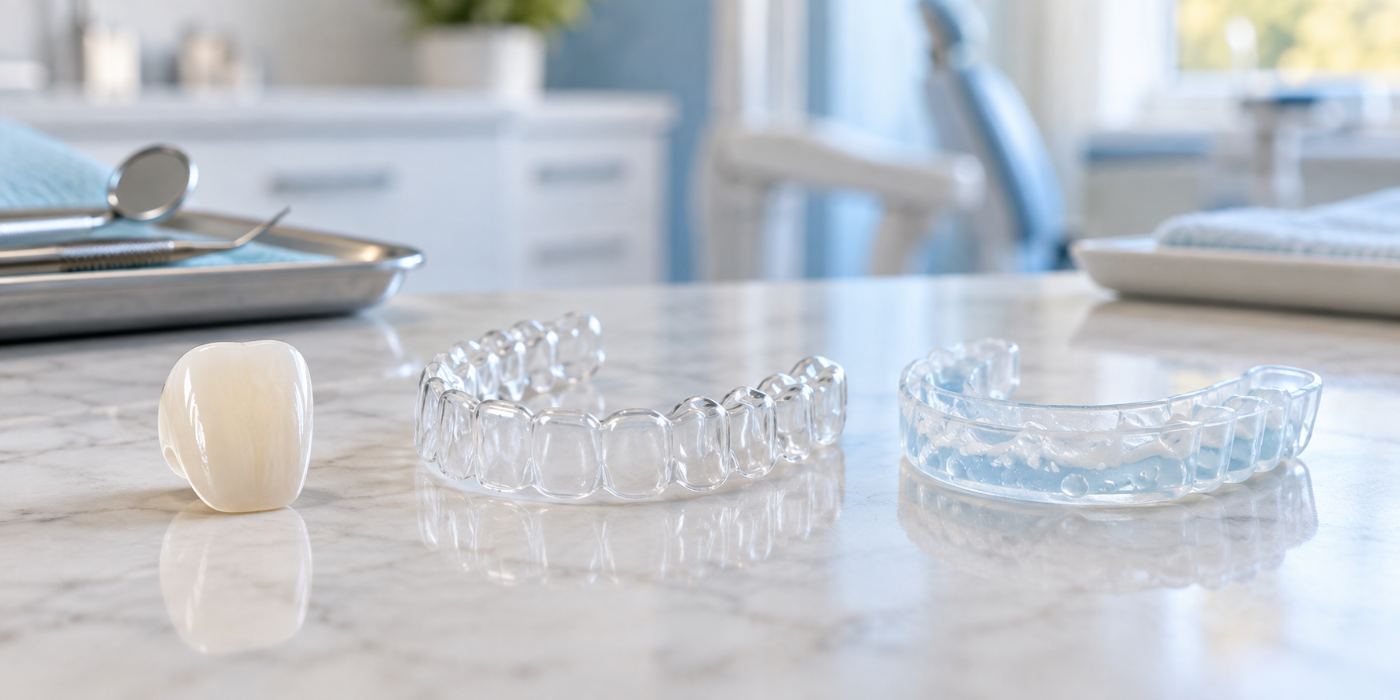
Veneers vs. Invisalign vs. Teeth Whitening: What’s Right for Your Smile Goals?
By Envision Dental Spa
Published October 1, 2026
Not every smile concern calls for the same solution, and it’s easy to assume you need the “biggest” option when a smaller, less expensive one would actually get you there. Here’s how to think about which of these three popular options fits your specific goal.
The Quick Answer, by Goal
| Your main concern | Likely best fit |
|---|---|
| Teeth are straight but discolored | Teeth whitening |
| Teeth are crooked, gapped, or misaligned | Invisalign (or traditional orthodontics) |
| Teeth are chipped, oddly shaped, or a mix of issues | Veneers |
| You want the fastest, most dramatic total transformation | Veneers (sometimes combined with whitening or minor orthodontics first) |
Teeth Whitening: For Color Only
Whitening treatments — whether in-office or professional take-home trays — address discoloration and staining. They don’t change the shape, size, alignment, or spacing of your teeth. If your teeth are already straight and well-shaped but look dull, yellowed, or stained from coffee, wine, or tobacco, whitening alone may get you most of the way to your goal at a fraction of the cost of veneers.
Invisalign: For Alignment, Not Color or Shape
Invisalign (clear aligner therapy) gradually moves teeth into better alignment — closing gaps, fixing crowding, or correcting a misaligned bite. It’s a longer process, typically 6-18 months, but it works with your natural teeth rather than covering them. It won’t change tooth color or fix chips, so patients sometimes follow Invisalign with whitening for a complete result.
Veneers: For Shape, Color, and Alignment All at Once
Veneers are the most comprehensive (and most expensive) of the three because they can simultaneously address color, shape, minor spacing issues, and chips or wear — all in a matter of weeks rather than months. This is why they’re often the choice for a dramatic “before and after” transformation, but it’s worth being clear-eyed that they’re also a bigger financial and, in the case of porcelain, permanent commitment.
Can You Combine Them?
Yes, and it’s common. A frequent sequence is: Invisalign to straighten teeth first, then whitening or a small number of veneers to finish the look. This can sometimes achieve results similar to a full veneer smile makeover at a lower total cost, though it takes longer since orthodontic movement isn’t instant.
How to Actually Decide
The honest starting point is a consultation where a dentist evaluates your specific teeth — alignment, color, and shape — and recommends the least invasive option that will get you the result you’re picturing. More treatment isn’t automatically a “better” result; it’s about matching the right tool to your actual concern.
Not sure which option fits your smile goals?
Schedule a consultation with Envision Dental Spa and we’ll map out the most direct path to the smile you want.
Schedule a ConsultationFrequently Asked Questions
Envision Dental Spa — your trusted cosmetic and implant dentistry practice. This post is for general educational purposes and isn’t a substitute for a personalized consultation.