
What Happens If You Wait Too Long to Replace a Missing Tooth?
By Envision Dental Spa
Published October 19, 2026
It’s tempting to put off replacing a missing tooth, especially if it’s not visible when you smile or isn’t causing pain. But tooth loss sets off a chain of changes that get more complex — and more expensive to fix — the longer they go unaddressed.
Bone Loss Starts Almost Immediately
The jawbone under a missing tooth relies on the stimulation from that tooth’s root to maintain its density. Once the tooth is gone, that stimulation stops, and the bone begins to resorb (shrink). Studies have shown noticeable bone loss can begin within the first year, and it continues progressively the longer the gap is left unaddressed.
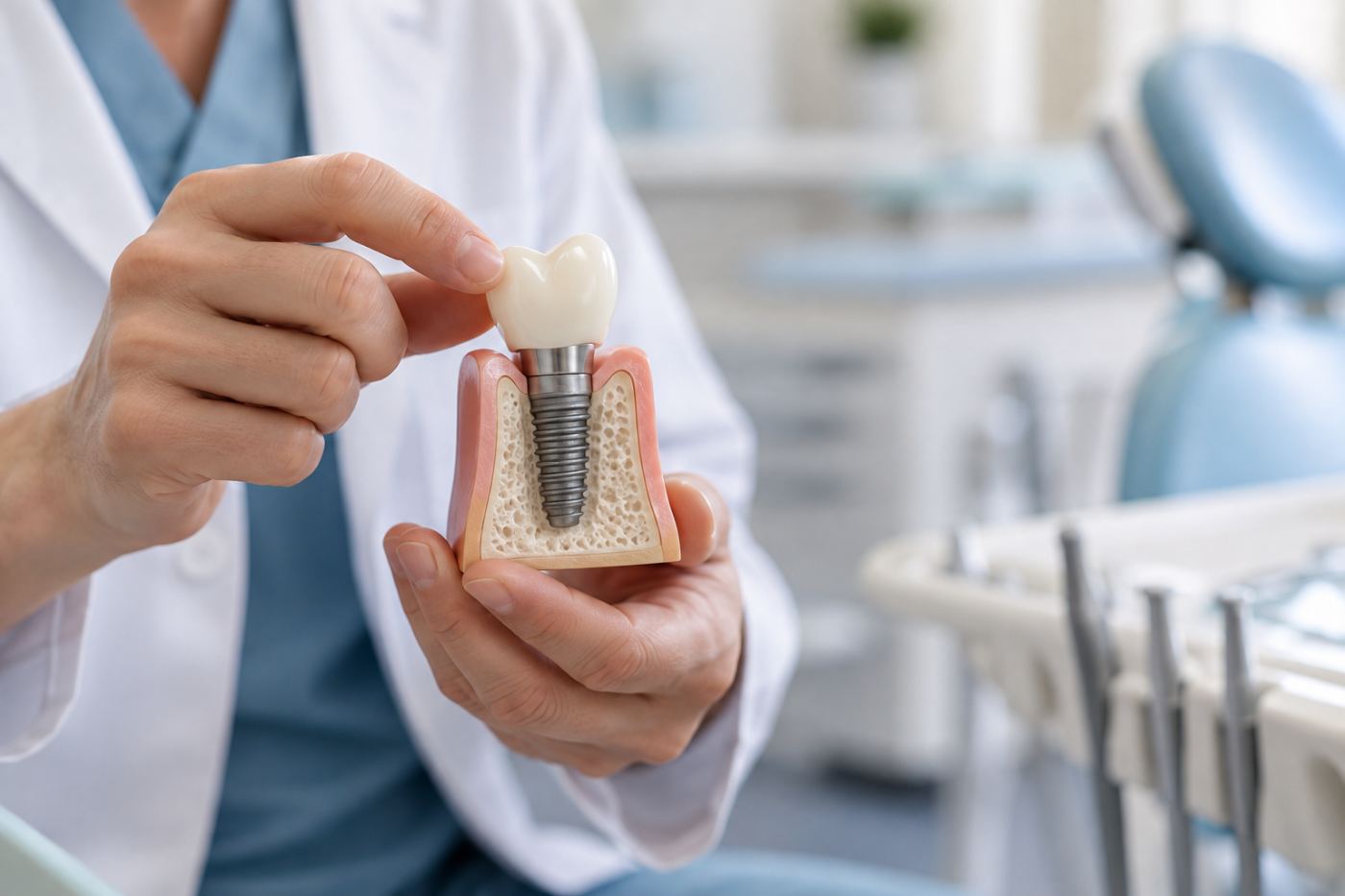
This matters directly for your future options: enough bone loss can mean that a dental implant, which requires adequate bone to anchor into, now needs a bone graft first — adding both time and cost to treatment that could have been avoided with earlier action.
Your Other Teeth Start to Shift
Teeth aren’t static — they rely on their neighbors for positional support. When a gap opens up, adjacent teeth can gradually tilt into the space, and the opposing tooth (on the other jaw) can slowly over-erupt into the gap since it no longer has anything to bite against. Over time, this can throw off your bite alignment in ways that go beyond the original missing tooth.
Your Bite and Jaw Function Can Be Affected
As teeth shift and your bite changes, some patients develop new patterns of uneven wear, jaw discomfort, or strain, since the mouth compensates for the altered alignment. This can, in some cases, contribute to TMJ-related symptoms over time.
It Can Affect Your Facial Structure
In cases of multiple missing teeth left untreated over years, the bone loss involved can subtly affect facial support and appearance, since the jawbone plays a structural role in the lower face.
The Good News: None of This Is a Reason to Panic
These changes happen gradually, not overnight, and none of them mean it’s “too late” to act — they simply mean that addressing a missing tooth sooner generally means a simpler, less expensive treatment than addressing it later. If it’s already been a while, a consultation with imaging will show you exactly where things stand and what your options look like now.
Missing a tooth and wondering where you stand?
Schedule a consultation with Envision Dental Spa to see your current bone health and the most direct path to a fix.
Schedule a ConsultationFrequently Asked Questions
Envision Dental Spa — your trusted cosmetic and implant dentistry practice. This post is for general educational purposes and isn’t a substitute for a personalized consultation.